
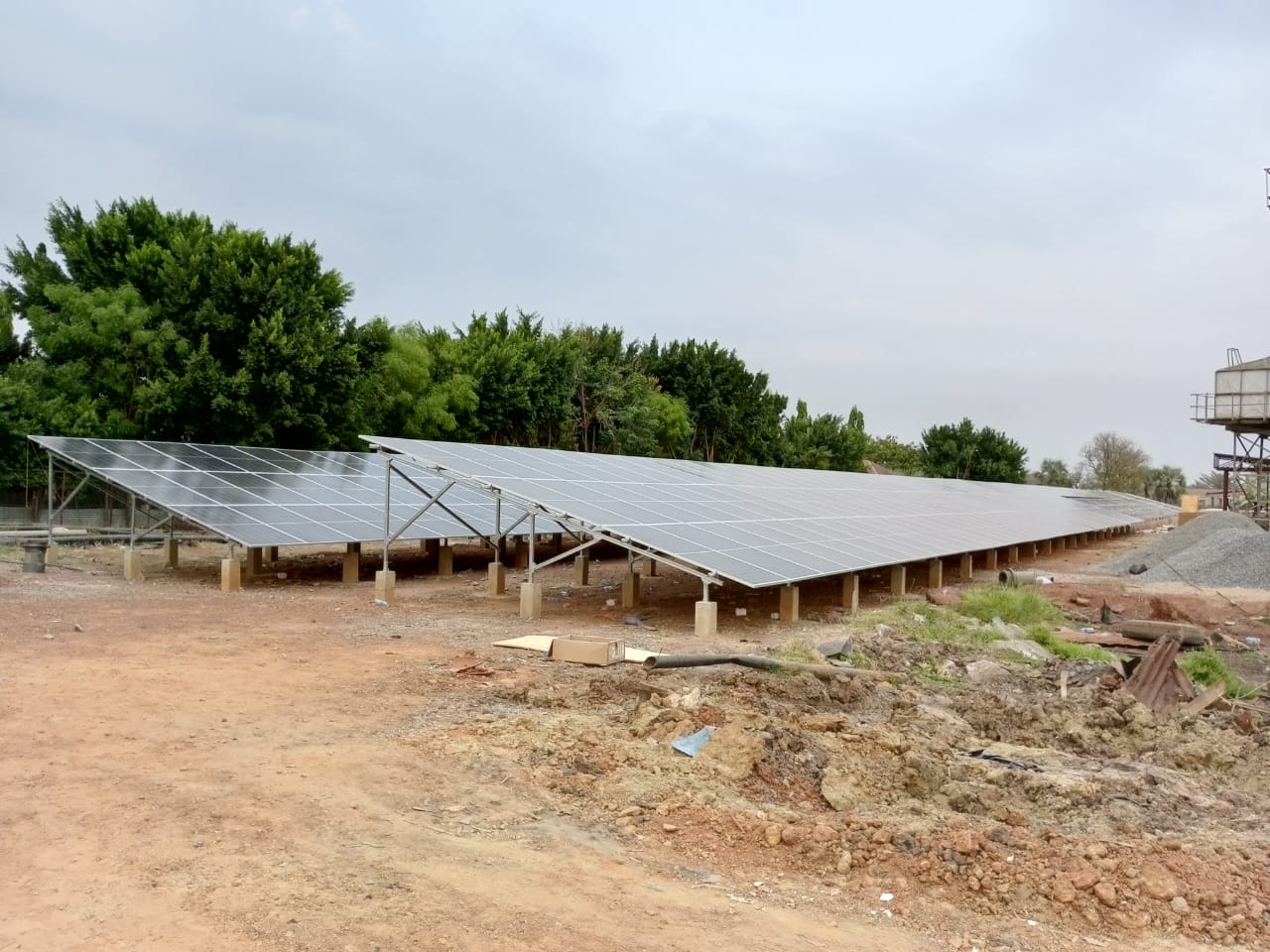
Service Details
Requirements for Designing a Solar Industrial System.
Designing a solar industrial system involves technical, regulatory, and environmental considerations tailored to the country’s unique conditions.
Below are the key requirements:
1. Site Assessment
Location Analysis: Evaluate the site’s solar potential using Kenya’s high solar irradiance data (average 5–6 kWh/m²/day).
Roof or Land Suitability: Assess roof structural integrity for rooftop systems (common in urban areas like Nairobi) or available land for ground-mounted systems (e.g., in rural industrial zones like Athi River).
Shading and Obstructions: Account for shading from nearby structures, trees, or dust accumulation, especially in arid regions like Kitui or Garissa.
2. Energy Needs Analysis
Load Profile: We analyze the industry’s energy consumption (kWh) and peak demand (kW) using utility bills or smart meters. Kenyan industries often have high loads (e.g., 100 kW–10 MW for factories).
Critical Loads: We identify critical equipment (e.g., refrigeration for flower farms or machinery for manufacturing) requiring backup power via batteries or hybrid systems.
Future Expansion: We account for potential increases in energy demand due to business growth or new machinery.
3. System Components
Solar Panels: Use high-efficiency monocrystalline panels for space-constrained sites or polycrystalline for cost-effectiveness. Select Tier-1 brands (e.g., Jinko, Trina) with warranties of 25 years.
Inverters: We choose central inverters for large-scale systems or string inverters for smaller setups. Ensure compatibility with Kenya’s grid standards (240V, 50Hz).
Mounting Systems: We design for Kenya’s environmental conditions, including high winds (coastal areas like Mombasa) or seismic activity (Rift Valley). Use corrosion-resistant materials for coastal humidity.
Battery Storage (Optional): Include lithium-ion for backup power during frequent grid outages or for off-grid systems in remote areas.
Monitoring Systems: Integrate real-time monitoring platforms (e.g., via apps or web portals) to track performance and detect issues early.
4. System Sizing and Design
Capacity: Size the system to offset 50–100% of the industry’s energy demand, typically ranging from 100 kW to several MW for large factories.
Panel Layout: Optimize panel tilt (10–15° in Kenya due to proximity to the equator) and orientation (north-facing for maximum exposure).
Electrical Integration: Ensure compatibility with the facility’s electrical infrastructure, including transformers and switchgear. Design for single-phase or three-phase connections as needed.
5. Regulatory and Permitting Requirements
Energy and Petroleum Regulatory Authority (EPRA): We obtain a permit for systems above 1 MW or if connecting to the grid. Comply with EPRA’s Grid Code for interconnection.
Net Metering: We adhere to Kenya’s net metering regulations (introduced in 2017) for systems up to 1 MW, allowing industries to offset bills with excess energy.
Building Permits: Secure county government approvals for structural modifications (e.g., rooftop installations) and comply with local building codes.
Environmental Compliance: Obtain clearance from the National Environment Management Authority (NEMA) for large ground-mounted systems or projects impacting the environment.
VAT and Tax Benefits: Ensure the system qualifies for VAT exemptions on solar equipment under Kenya’s Finance Act.
6. Financial and Contractual Considerations
Budget: We align the design with the client’s budget, balancing upfront costs with long-term savings. Kenya’s high electricity tariffs make solar cost-competitive.
Financing: Design systems compatible with PPAs, leases, or loans offered by local partners.
Warranties: We specify warranties for panels (25 years), inverters (5–10 years), and workmanship. Include maintenance plans for dust cleaning, common in Kenya’s dry regions.
7. Environmental and Safety Considerations
Climate Resilience: We design for Kenya’s diverse climates, including high temperatures (e.g., 30–40°C in Garissa) and coastal humidity (Mombasa).
Safety Standards: Comply with Occupational Safety and Health Act (OSHA) for worker safety during installation, including fall protection and electrical safety.
Waste Management: Plan for end-of-life disposal of panels and batteries per NEMA’s e-waste regulations.