
Service Details
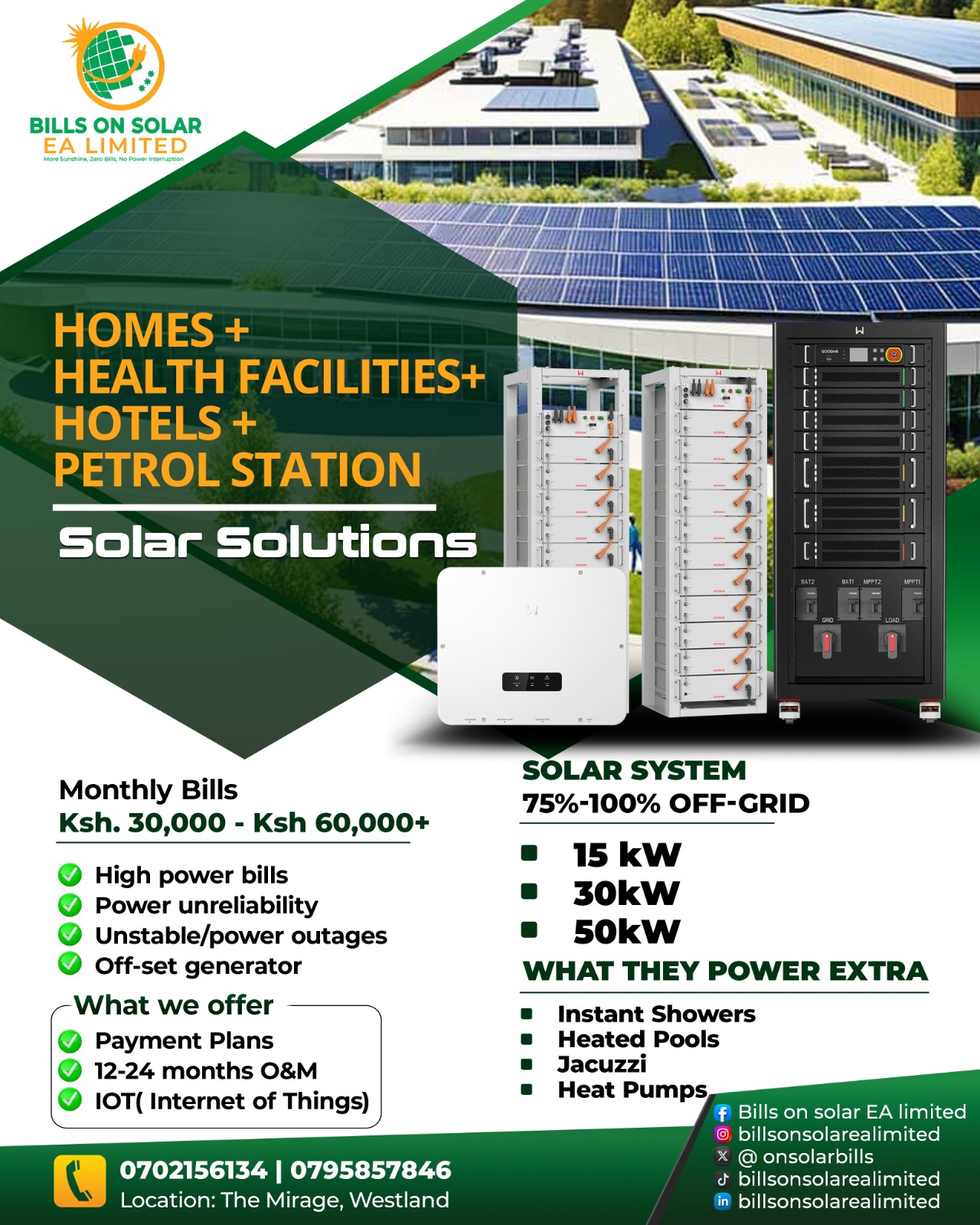
The suitable solar system size for small and medium enterprises (SMEs) like petrol stations, health centers farms , and hotels depends on their energy consumption, available space, budget, and operational requirements.
Below is a breakdown of the typical solar system ranges for each type of SME, based on their energy needs and relevant considerations:
1. Petrol Stations
Energy Needs: Petrol stations typically require electricity for fuel pumps, lighting, refrigeration, air conditioning, and point-of-sale systems. Average energy consumption ranges from 10,000 to 50,000 kWh per year, depending on size, operating hours, and amenities (e.g., convenience stores or car washes).
Suitable Solar System Size:
Small petrol stations: 10 kW to 30 kW systems, generating approximately 12,000–36,000 kWh annually.
Larger stations with additional facilities: 30 kW to 100 kW systems, generating 36,000–120,000 kWh annually.
Considerations:
Space: Roof-mounted systems are common, but canopy or ground-mounted systems over parking areas can also be utilized.
Battery Storage: Optional for backup during power outages, especially in remote areas, to ensure continuous operation of pumps and payment systems.
Example: A 20 kW system could cover a significant portion of a medium-sized station’s energy needs, reducing reliance on grid power and lowering operational costs.
2. Health Centers
Energy Needs: Health centers, particularly primary healthcare facilities, require reliable power for lighting, medical equipment (e.g., vaccine refrigerators, diagnostic machines), ventilation, and sometimes cooling. Energy consumption varies widely, from 5,000 to 50,000 kWh per year for small clinics to larger facilities.
Suitable Solar System Size:
Small clinics or primary health centers: 5 kW to 20 kW systems, generating 6,000–24,000 kWh annually.
Medium to large health centers (e.g., with advanced equipment or 24/7 operations): 20 kW to 100 kW systems, generating 24,000–120,000 kWh annually.
Considerations:
Reliability: Solar systems with battery storage are critical for uninterrupted power, especially for vaccine storage and critical care equipment.
Examples: The UNDP’s Solar for Health initiative has implemented systems as small as 1.5 kW to 20 kW for primary health centers, with larger facilities using systems exceeding 20 kW. Kaiser Permanente’s San Diego Medical Center uses a large solar array (~100 kW equivalent) to meet significant portions of its demand.
Hybrid Systems: In areas with unreliable grids, hybrid systems combining solar with diesel generators or grid power are common to ensure 24/7 operation.
3. Hotels
Energy Needs: Hotels have high energy demands for lighting, air conditioning, water heating, kitchen equipment, laundry, and elevators. Energy consumption varies significantly by size and type:
Small boutique hotels: 20,000–100,000 kWh per year.
Medium to large hotels: 100,000–500,000 kWh per year or more.
Suitable Solar System Size:
Small hotels (e.g., boutique or budget): 20 kW to 100 kW systems, generating 24,000–120,000 kWh annually.
Large hotels or resorts: 100 kW to 500 kW systems, generating 120,000–600,000 kWh annually.
Considerations:
Space: Large roof areas or adjacent land can accommodate extensive solar arrays.
Energy Storage: Battery systems are useful for storing excess energy for nighttime use or peak demand periods, such as evening guest services.
Additional Applications: Solar can power EV charging stations, outdoor lighting, or pool heating, enhancing guest experience and sustainability credentials.
Feasibility Analysis: A detailed assessment of roof conditions, energy demand, and local regulations is necessary to design an optimal system.
General Considerations for All SMEs
Energy Audit: Conduct an energy audit to determine exact consumption and peak load requirements. This helps size the system accurately.
Location and Solar Irradiance: The system’s output depends on local sunlight availability. For example, areas with high solar irradiance (e.g., 5–6 kWh/m²/day) require fewer panels than areas with lower irradiance (e.g., 3–4 kWh/m²/day).
Inverter and Storage: Most SMEs benefit from inverters to convert DC to AC for standard equipment. Battery storage is recommended for critical operations (e.g., health centers) or areas with frequent outages.
Financial Incentives: Check for local incentives, tax breaks, or financing options like Power Purchase Agreements (PPAs) to reduce upfront costs.
Maintenance: Regular monitoring and maintenance ensure system efficiency and longevity.
Scalability: Start with a system sized for current needs but designed for future expansion if energy demands increase.
Recommendations
Petrol Stations: Start with a 5–50 kW system for medium-sized stations, focusing on canopy or roof installations to offset fuel pump and store energy costs.
Health Centers: Opt for 5–20 kW systems for small clinics, with battery storage for reliability. Larger facilities may need 50–100 kW to cover advanced equipment.
Hotels: Small hotels can begin with 10–100 kW systems, while larger resorts may require 200–500 kW to meet high energy demands and enhance sustainability marketing